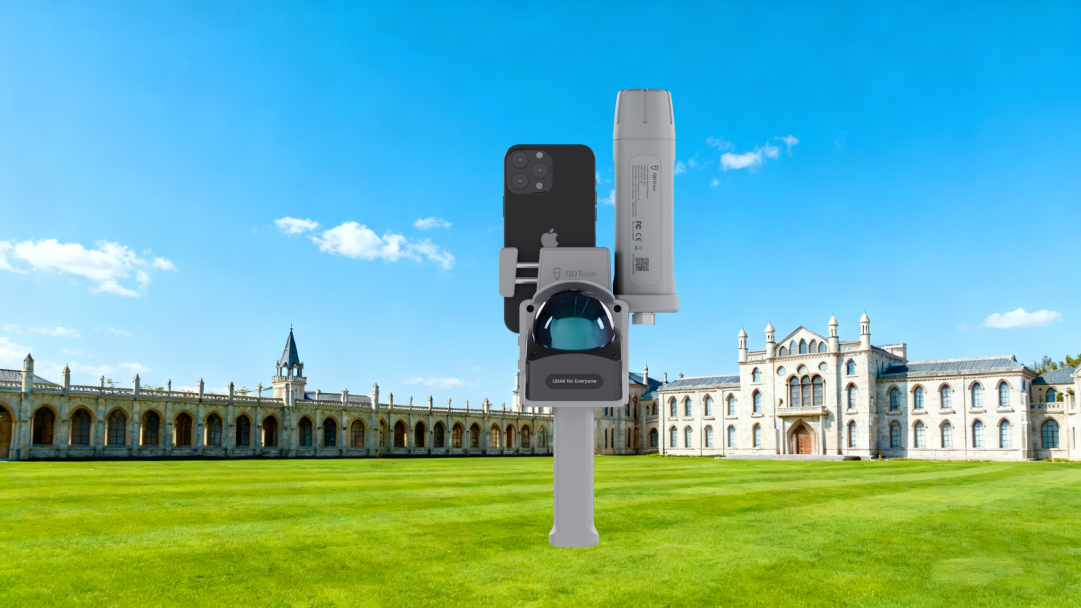




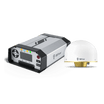

Traffic accident investigations demand precision, speed, and objectivity—but conventional measurement methods often fall short. They’re labor-intensive, time-consuming, and prone to human error, making it hard to capture the fine details critical for accurate forensics and collision analysis. Fortunately, the FJD Trion P2 3D LiDAR Scanner is changing the game, offering a streamlined, high-precision solution for digital accident scene reconstruction.
Why FJD Trion P2 Stands Out for Accident Investigations
Designed for both seasoned surveyors and scanning beginners, the Trion P2 eliminates the need for complex calibrations and tedious post-processing. Here’s how it empowers accident experts:
1. Lightweight Portability & Long Runtime
Weighing just 1kg, the Trion P2 is easy to carry and maneuver—even in tight or uneven accident scenes. With a 4-hour runtime, it delivers uninterrupted scanning to capture every detail without frequent recharging.
2. Blazing-Fast Scanning & Centimeter-Level Accuracy
Equipped with powerful SLAM technology, the Trion P2 captures hundreds of thousands of data points per second, covering up to 70 meters. It achieves 1.2cm horizontal accuracy (L2cm specification), ensuring measurements are reliable for collision analysis, liability determination, and legal documentation.

3. Real-Time Colorization & Intuitive Operation
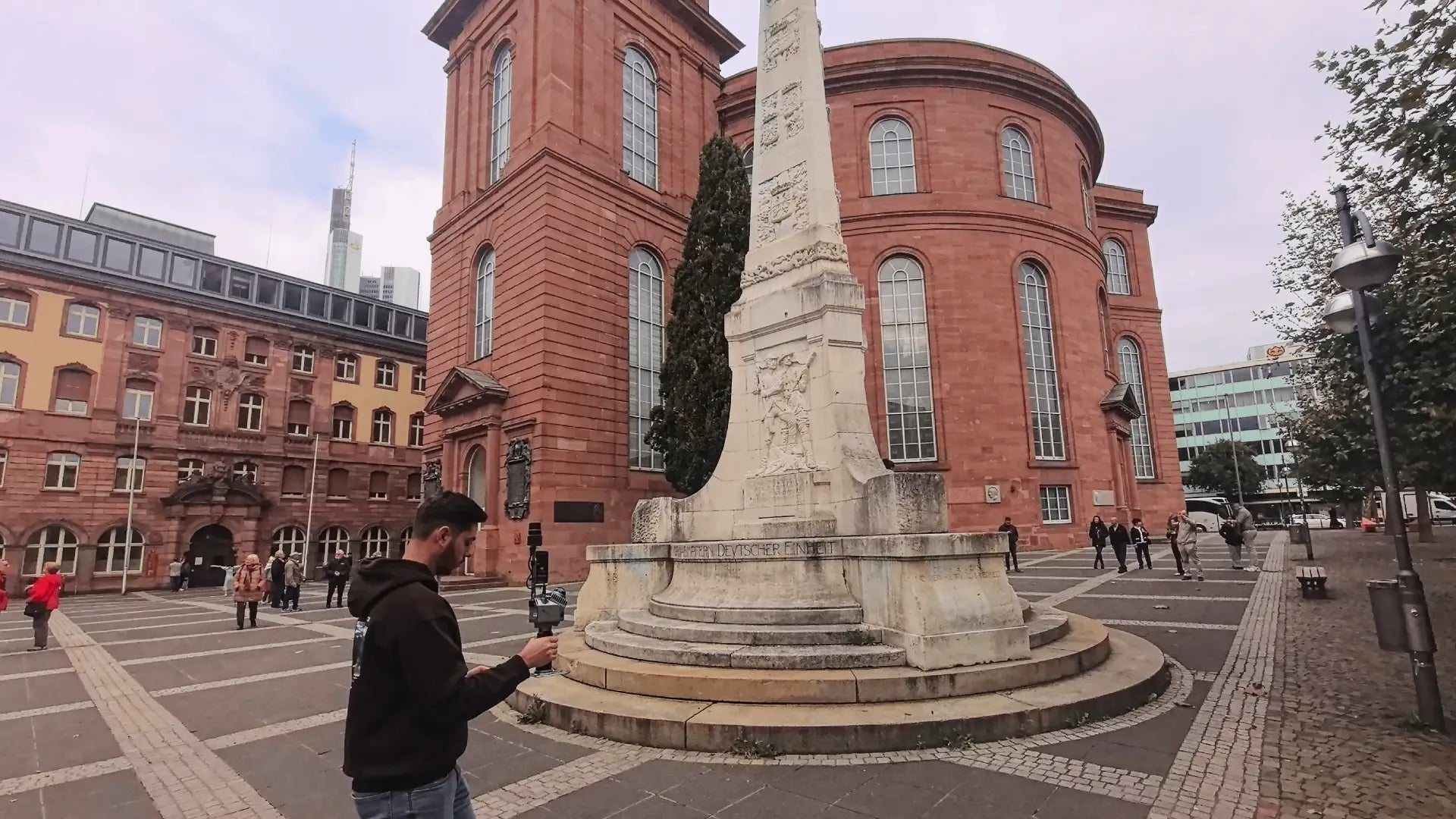
No more monochrome point clouds—this scanner offers real-time colorization to preserve visual context (e.g., road markings, vehicle damage, debris). Simply walk around the scene with the P2, and it automatically builds a detailed 3D point cloud—no advanced technical skills required.

From Scanning to Analysis: A Complete Workflow
The Trion P2 isn’t just a scanner—it integrates seamlessly with post-processing tools to turn raw data into actionable insights:
Step 1: 3D Point Cloud Capture
Walk through the accident scene with the Trion P2 to capture a comprehensive point cloud. The scanner handles registration, RTK-based mapping, and PPK calculations automatically, so you can focus on the scene instead of setup.

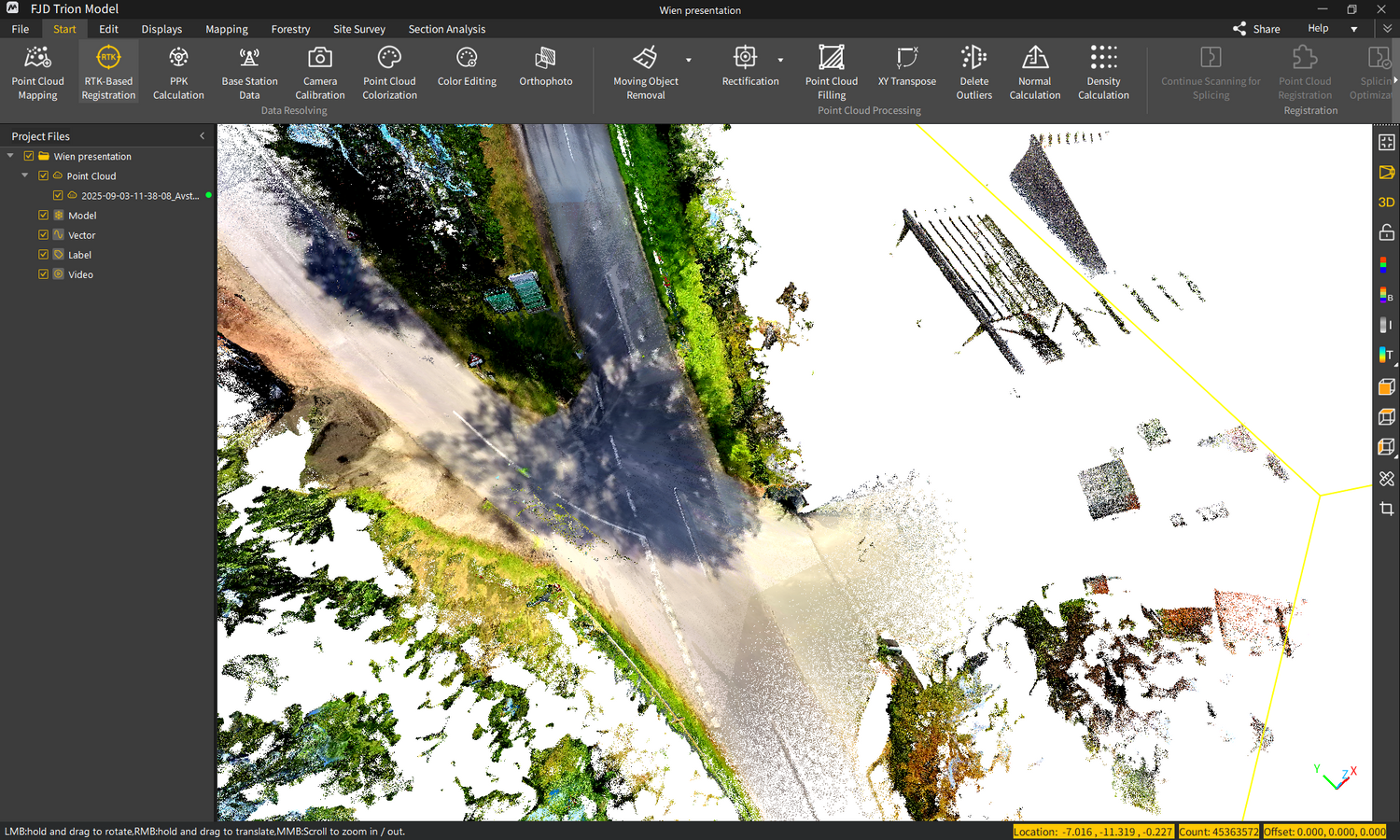
Step 2: Data Refinement with Trion Model Software
Use the companion Trion Model Software to refine your data:
- Remove moving objects (e.g., passing vehicles, pedestrians) to isolate the accident scene
- Edit point cloud color, density, and outliers for clarity
- Generate orthophotos and 3D models for detailed analysis
- Support for coordinate transformation and section analysis
Step 3: Collision Analysis with AnalyzerPro
Export your refined data to AnalyzerPro 25 for in-depth collision analysis. The software integrates with point clouds, video footage, and vehicle data (e.g., CDR data, pre-crash RPM/speed/steering inputs) to calculate critical metrics:
- Collision speed (Koll-Geschw) and acceleration (mittlere Verz)
- Delta-V (velocity change) and impact angles
- Structural stiffness and dynamic deformation
- Pre/post-crash vehicle behavior (e.g., ABS activity, brake activation)
Step 4: Integration with Agisoft Metashape
For enhanced visual reconstruction, combine Trion P2’s point clouds with photos using Agisoft Metashape Standard. This workflow generates high-fidelity meshes and 3D models, perfect for presenting evidence in court or stakeholder meetings.
Who Benefits from the Trion P2?
- Traffic accident forensics experts
- Law enforcement agencies
- Insurance adjusters
- Civil engineering firms (road safety analysis)
- Legal teams requiring objective scene documentation
Ready to Elevate Your Accident Investigations?
The FJD Trion P2 isn’t just a tool—it’s a partner in delivering fair, accurate, and efficient accident scene documentation. Explore the scanner today and transform how you capture, analyze, and present accident data.